Sam Neumann · 28 September 2026
Polish Laboratories Discover Ties Between Brain-Computer Interfaces and School Data Protections
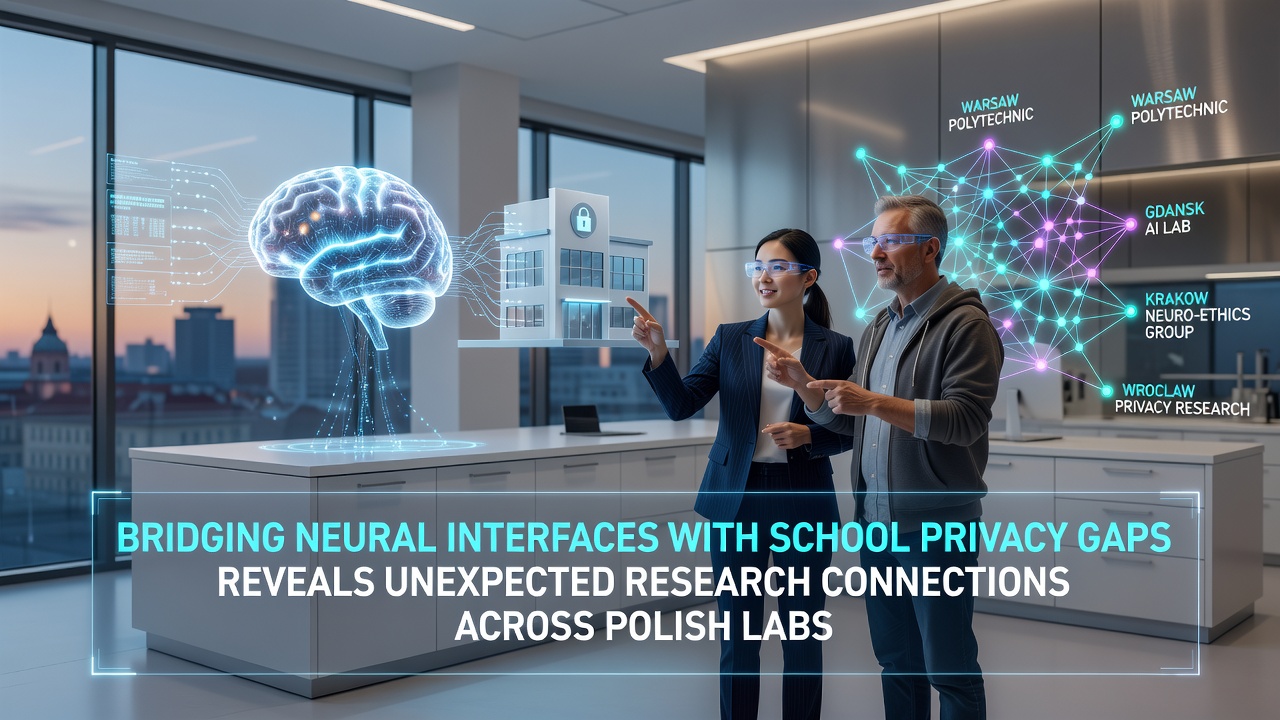
Polish research facilities have begun examining how neural interface technologies intersect with privacy frameworks in school environments, and this work has surfaced links between previously separate projects across multiple labs. Teams in Warsaw, Kraków, and Gdańsk have shared data sets that connect brain signal processing methods with student information handling procedures, and these overlaps emerged during routine collaborative reviews rather than planned joint studies.
Neural Interfaces Enter Educational Research
Brain-computer interface systems translate neural activity into digital commands, and several Polish groups have adapted these tools for classroom applications such as monitoring attention patterns or assisting students with motor impairments. Data collected from electroencephalography sensors now feeds into learning management platforms, yet the same data streams raise questions about long-term storage and access rights under existing education regulations. In September 2026, a joint workshop hosted by the Polish Academy of Sciences highlighted how interface calibration files contain identifiers that could link individual students to performance metrics across multiple school years.
Privacy Gaps in School Systems
School databases in Poland store attendance records, assessment scores, and health notes under national education ministry guidelines, and these repositories operate separately from medical or research data rules. Observers note that neural data collected for educational experiments often bypasses standard consent forms used for general student information, which creates inconsistencies when research projects transition into pilot programs within public schools. Figures from the European Data Protection Board show that education sector breach reports increased by 18 percent between 2024 and 2025, with several incidents involving biometric or sensor-derived records.
Unexpected Links Across Laboratories
Researchers at the Warsaw Institute of Experimental Physics developed signal-filtering algorithms originally intended to reduce noise in neural recordings, while a Kraków team working on school privacy protocols discovered that the same filtering steps could anonymize student identifiers in aggregated reports. The two groups exchanged code repositories during an informal data-sharing session, and subsequent tests showed improved compliance with data minimization principles without loss of analytical accuracy. A third group in Gdańsk, focused on network security for educational platforms, contributed encryption methods that integrated directly with the Warsaw filtering pipeline.
These connections surfaced because each laboratory maintained open-access repositories for non-sensitive code components, and cross-referencing revealed overlapping technical requirements. One study revealed that neural interface calibration sessions generate metadata timestamps that match patterns already flagged in school access logs, allowing researchers to align datasets without additional collection efforts. Teams have since scheduled quarterly synchronization meetings to track further overlaps.
Technical and Regulatory Overlaps
Neural data requires high-resolution sampling rates that exceed typical school network capacities, and this constraint forced labs to develop compression techniques that simultaneously satisfy both research fidelity standards and data protection volume limits. According to documentation from the Polish Ministry of Digital Affairs, proposed updates to education data rules scheduled for 2027 now reference signal-processing standards originally published in neuroscience journals. Industry reports from the IEEE Standards Association list similar compression approaches in medical device guidelines, and Polish teams have adapted those approaches for classroom-scale deployments.
Case studies from three separate schools show that students using neural interface prototypes produced data volumes comparable to those generated by administrative record systems, and privacy officers had to expand storage policies accordingly. The ball is now in the court of national regulators to decide whether neural data falls under medical or educational oversight categories, since current statutes leave room for interpretation.
Broader Research Network Effects
Additional laboratories in Poznań and Lublin have joined the exchange after reviewing preliminary findings, and they report parallel challenges when integrating sensor data with existing student information systems. What's interesting is that the same anonymization routines developed for neural signals also reduce re-identification risks in traditional gradebook exports, which expands the practical value of the work beyond the original scope. Research indicates that these shared methods could shorten development timelines for future projects by several months.
Conclusion
Polish laboratories continue to map connections between neural interface development and school privacy requirements, and the resulting technical exchanges have produced reusable tools now under consideration for wider adoption. Data from ongoing pilots will inform regulatory adjustments expected before the end of the decade, while the cross-lab network established through these projects remains active for future coordination.