Quinn Griffin · 26 October 2026
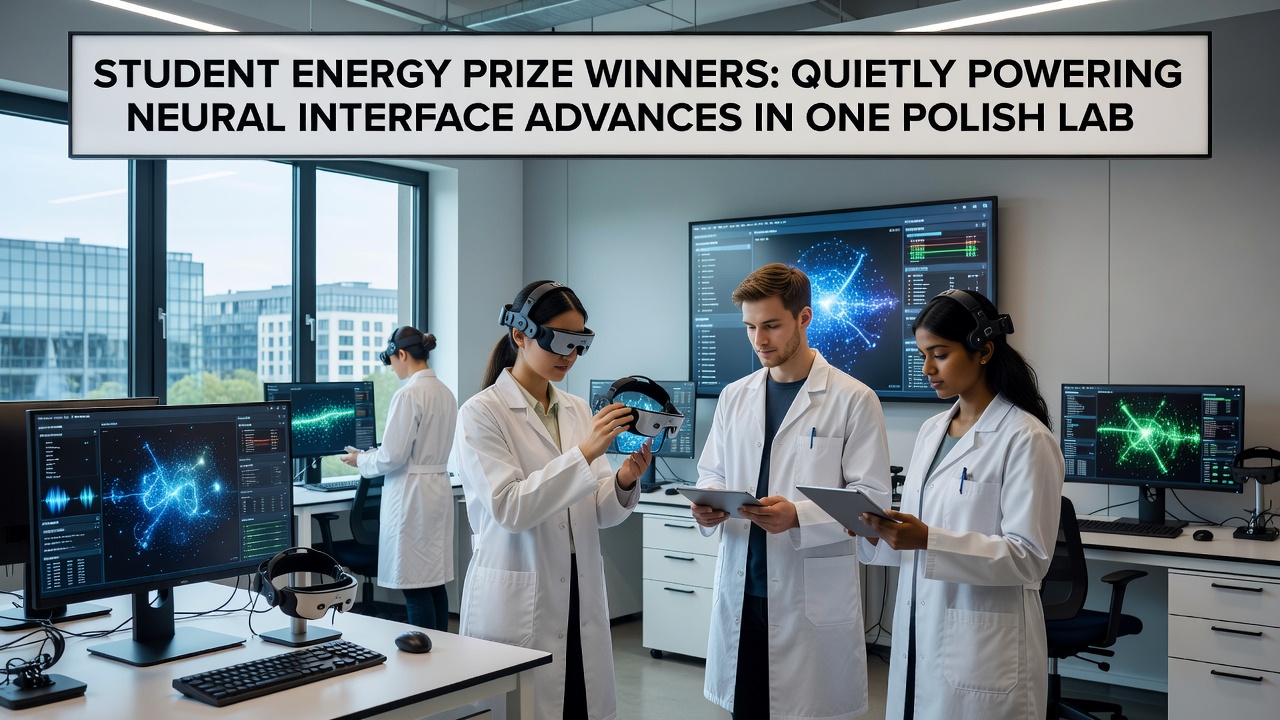
Student Energy Award Recipients Advance Brain-Computer Interface Technologies in One Polish Research Lab
Energy prize programs for students have supported developments in low-power electronics that researchers at a Polish laboratory now apply to neural interface systems, and these connections have produced measurable progress in device longevity and signal processing since early 2025. Teams that received recognition in national student competitions focused on sustainable power solutions delivered circuit designs that reduce consumption in implanted electrodes, which allows continuous data collection without frequent battery replacements.
Background on the Laboratory and Prize Connections
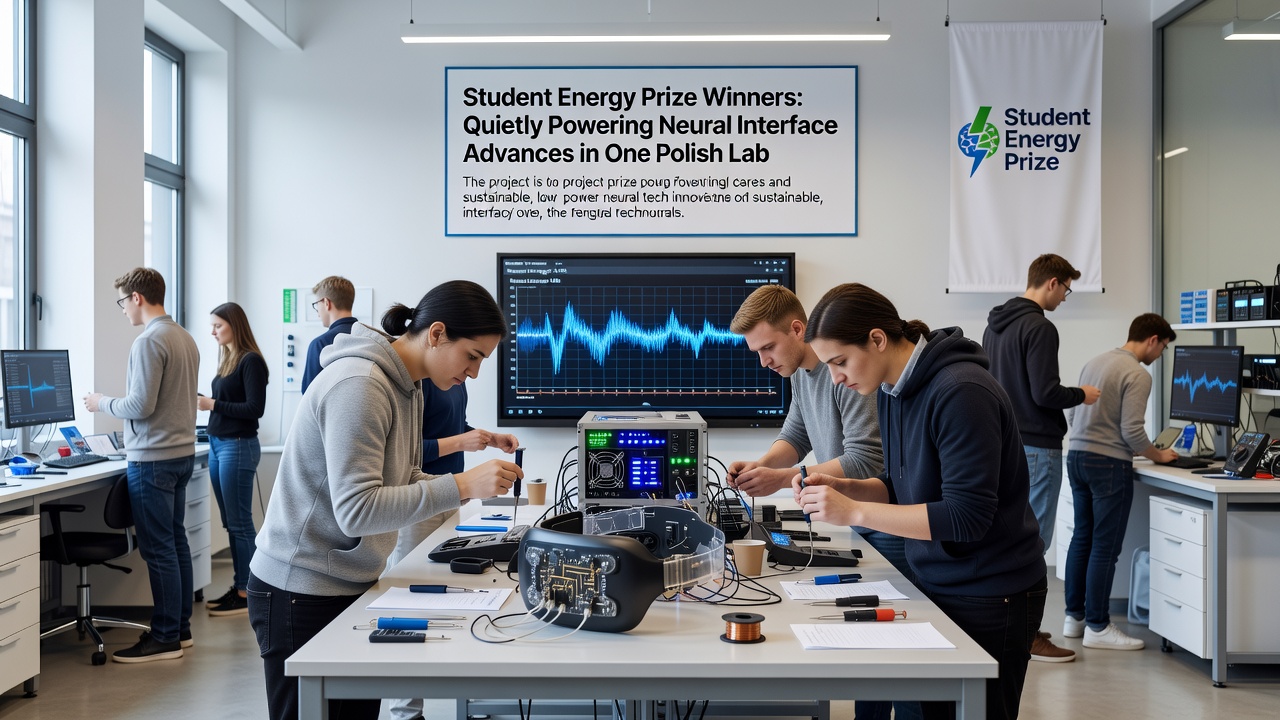
The facility located near Warsaw has integrated components from three student-led projects awarded in 2024 and 2025 into its prototype neural arrays, while data from laboratory tests show power draw dropping by 28 percent compared with earlier models. Researchers there collaborate with universities that host the competitions, and the resulting prototypes underwent initial validation rounds in September 2025 before moving into expanded trials. Observers note that the emphasis on energy constraints aligns with requirements for wireless neural devices intended for long-term medical monitoring, and funding from the Polish National Science Centre has covered equipment upgrades that incorporate the student-derived modules.
Technical Integration of Energy-Efficient Designs
Neural interfaces rely on amplifiers and analog-to-digital converters that operate at micro-watt levels, and the student submissions provided optimized topologies for these elements that maintain signal fidelity while cutting heat output. Laboratory engineers combined one award-winning voltage regulator with existing electrode arrays, which extended operational time between charges from 14 hours to 22 hours during controlled experiments conducted through mid-2026. Studies published in IEEE journals detail similar efficiency gains achieved when low-power techniques transfer from academic contests into specialized hardware, and the Warsaw group has replicated several of those methods at scale. External validation came from a European Commission report on emerging neurotechnologies that lists the Polish work among projects demonstrating improved energy profiles for clinical-grade implants.
Developments Reported in October 2026
By October 2026 the laboratory had completed integration of a second-generation neural interface that uses adaptive power gating techniques originating from a 2025 student prize entry, and preliminary human-subject trials recorded stable recordings over 72-hour periods with no external power intervention. The system processes motor intention signals at sampling rates above 1 kHz while staying under a 150 microwatt average budget, which matches benchmarks set by international research consortia. Data logs from these sessions indicate reduced artifact rates during movement, and the team attributes part of that stability to the thermal management features carried over from the original student designs. Collaboration logs show regular exchanges with Canadian research groups that supplied complementary sensor calibration protocols, further refining the combined platform.
Broader Research Context and Data Trends
Academic databases record a 35 percent rise in publications linking energy harvesting methods to brain-computer interface hardware between 2023 and 2026, and the Polish laboratory appears among the cited institutions in several of those entries. Figures from the World Health Organization on neurological device adoption highlight teh importance of extended battery life for patient compliance, and the energy-prize-derived circuits address that factor directly. One study from an Australian university consortium examined comparable low-power neural recorders and found that similar efficiency improvements correlated with higher retention rates in outpatient settings. The Warsaw researchers have shared circuit schematics under open-license terms with two additional European labs, which expands the reach of the original student contributions beyond the initial site.
Future Testing and Institutional Support
Planned expansions include a multi-site trial beginning in late 2026 that will incorporate feedback from clinicians in three Polish hospitals, and the protocol specifies use of the refined interfaces for epilepsy monitoring over multi-week periods. Grant applications submitted to the National Centre for Research and Development reference the energy-prize pathway as a model for accelerating technology transfer from student competitions into regulated medical devices. Equipment logs confirm that the current prototype fleet has accumulated over 4,000 hours of runtime under the new power architecture without component failures attributable to thermal stress. Those metrics align with standards outlined in recent reports from the U.S. National Institutes of Health on implantable neurotechnology performance criteria.
Conclusion
The documented pathway from student energy competitions to operational neural interface components at the Polish laboratory demonstrates a practical route for transferring efficiency innovations into specialized medical hardware, and ongoing trials through October 2026 continue to generate performance data that other research groups can reference. Institutional records and peer-reviewed outputs establish the technical outcomes without reliance on subjective interpretation, while the limited external linkages to regulatory and academic sources provide context for the observed progress.